
PUF Cold Room Panels: Features, Advantages & Industrial Uses
There’s a moment every food manufacturer, pharma distributor, or cold chain logistics operator eventually faces — when a batch of product is compromised because the storage environment failed. Temperature slipped. Insulation wasn’t up to the job. The consequences are expensive, sometimes catastrophic.
Cold room panels exist to make sure that moment never happens. And among the various options available today, PUF cold room panels have become the industry standard for a reason — they deliver reliable, consistent thermal performance in environments where getting it wrong isn’t an option.
What Are Cold Room Panels?
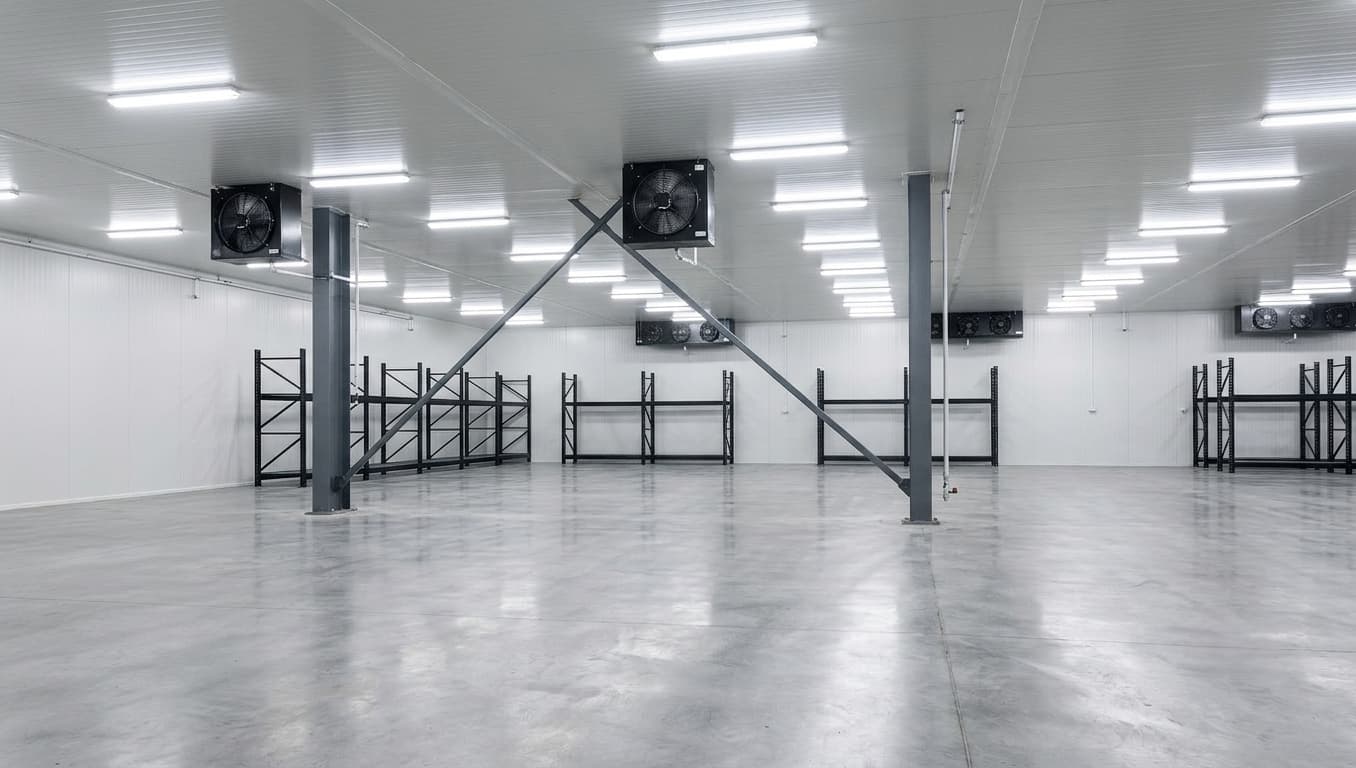
At their core, cold room panels are insulated building panels engineered specifically to maintain controlled temperature environments. The construction is straightforward: a rigid insulating core — most commonly polyurethane foam (PUF) or polyisocyanurate (PIR) — sandwiched between two metal sheets.
What makes them effective is the foam core’s extremely low thermal conductivity. Heat transfer between the inside and outside of the cold room is dramatically reduced, which means your refrigeration system doesn’t have to work as hard to hold temperature. That translates directly into lower power bills and longer equipment life.
BNAL Prefabs has been manufacturing and supplying cold storage panels and prefabricated insulation systems for industrial and commercial projects since 1989, building a track record across some of India’s most demanding storage applications.
Types of Cold Room Panels
The right panel for a project depends on what temperature range you’re working with and how stringent your fire safety requirements are. Here’s how the main types break down:
PUF Cold Room Panels are the most widely used. Polyurethane foam offers excellent thermal insulation at a reasonable cost, and the panels are light enough to handle and install without heavy equipment. They resist moisture well, which matters in refrigerated environments where condensation is a constant factor. Food processing units, pharmaceutical warehouses, and general cold storage facilities predominantly rely on PUF panels.
PIR Cold Room Panels are the upgrade choice when fire resistance is a requirement. Polyisocyanurate foam has a higher fire rating than PUF and performs slightly better thermally. Projects with strict fire codes — hospitals, certain pharmaceutical facilities, multi-story cold stores — often specify PIR over PUF despite the higher cost.
Freezer Room Panels are designed for sub-zero applications. When you need to hold temperatures well below freezing, the insulation thickness and core density requirements are different from standard cold storage. These panels are built for exactly that — ultra-low temperature environments where any thermal bridging becomes a serious problem.
Temperature Controlled Storage Panels cover the broader category of controlled-environment warehousing. Medicines, dairy products, certain chemicals, fresh produce — all of these need storage conditions that sit within tight temperature bands. These panels are specified when the requirement is consistent temperature control rather than deep freezing.
What Makes These Panels Worth the Investment
The insulation performance is the obvious starting point, but it’s worth understanding what good insulation actually does for a facility beyond just ‘keeping things cold.’
Energy costs in cold storage are substantial. Refrigeration systems run continuously, and every watt of energy they consume is fighting heat trying to get in through the walls, roof, and floor. Well-insulated panels reduce that heat ingress significantly — some operators report 20–30% reductions in energy consumption after switching from conventional construction to properly specified cold room panels. Over the life of a facility, that adds up to real money.
The hygienic surface finish matters more than people expect. Cold room environments are inspected regularly, and cleaning is non-negotiable in food and pharma applications. The smooth metal faces of PUF panels are easy to wipe down, don’t harbor bacteria, and meet the surface standards that food safety regulations require.
Moisture and corrosion resistance is the other underappreciated benefit. Refrigerated environments create condensation. Traditional construction materials deteriorate under prolonged moisture exposure. Cold room panels are built to handle this — the facings and sealants are selected specifically for durability in humid, temperature-cycling conditions.
Installation speed is genuinely faster compared to conventional cold room construction. Panels arrive on-site pre-fabricated to specification, which reduces skilled labor hours and shortens the project timeline. For a business that needs its cold storage operational by a specific date, that matters.
Industries That Rely on Cold Room Panels
The application list is wider than most people assume.
Food Processing is the obvious one. Processing plants, packing facilities, distribution centers — cold room panels are standard specification across the entire food supply chain, from farm-level storage to retail distribution.
Pharmaceuticals represent one of the most demanding applications. Medicines, vaccines, and biological products often have strict storage temperature requirements with zero tolerance for deviation. The reliability of the insulation system is critical.
Dairy and Beverages have their own cold chain requirements. Milk, juices, and fermented products need consistent cool storage from processing through to dispatch.
Logistics and Warehousing have seen significant investment in cold storage capacity in recent years, driven by e-commerce and the growth of frozen and chilled food delivery. Modern 3PL warehouses routinely include cold rooms built with insulated panels.
Hotels and Commercial Kitchens use cold room panels for walk-in refrigerators and freezers. The durability and hygienic surface finish make them a practical choice for high-use commercial kitchen environments.
Agriculture and Horticulture depend on post-harvest cold storage to reduce spoilage losses. Fruits, vegetables, and cut flowers all benefit from controlled storage conditions immediately after harvest.
Choosing the Right Panel — What to Think About
Getting the specification right at the start saves significant cost and trouble later. A few things worth working through carefully:
Temperature range drives everything else. The colder the operating temperature, the thicker the insulation needs to be and the more important it becomes to eliminate thermal bridges at joints, corners, and door openings. Don’t underspecify for cost savings — it ends up costing more in energy consumption over the life of the facility.
PUF versus PIR comes down to fire requirements. If your project has a fire safety specification that PUF doesn’t meet, PIR is the answer. If standard fire ratings are acceptable, PUF delivers excellent thermal performance at lower cost.
Moisture resistance needs to be verified, not assumed. Confirm that the panel facings, core material, and joint sealing system are all rated for the humidity conditions your facility will generate. This is especially important for blast freezing applications where temperature differentials are extreme.
Work with a manufacturer who understands the application, not just the product. Cold room panel installations involve detailing at every junction, penetration, and door frame. Experience with similar projects is worth more than a slightly lower unit price.
Why BNAL Prefabs for Cold Room Panels
BNAL Prefabs has been building cold storage solutions since 1989. That’s not just a number — it represents decades of projects across food processing, pharmaceuticals, warehousing, agriculture, and hospitality, across a wide range of climate conditions and operational requirements.
They manufacture continuous line PUF panels with consistent quality control, offer customized insulation thickness to match your temperature requirements, and handle design, engineering, supply, and pan-India dispatch as a complete package. The in-house engineering capability means you’re not coordinating between a panel supplier and a separate design consultant — the technical knowledge sits in one place.
For businesses that need cold storage built right and built on time, that combination of manufacturing capability and application experience is what makes the difference.
BNAL Cold Room & Cold Storage Projects
In Closing
Cold room panel selection isn’t glamorous, but it’s one of the most consequential decisions in a cold storage project. The insulation performance, energy efficiency, and durability of the panels you specify will affect operating costs and product safety for the life of the facility.
PUF cold room panels have become the standard for good reason — they deliver the thermal performance, hygiene, and durability that temperature-sensitive industries need. Getting the specification right, with the right manufacturing partner behind it, is the foundation everything else is built on.
BNAL Prefabs has been that manufacturing partner for over 35 years. The track record speaks for itself.