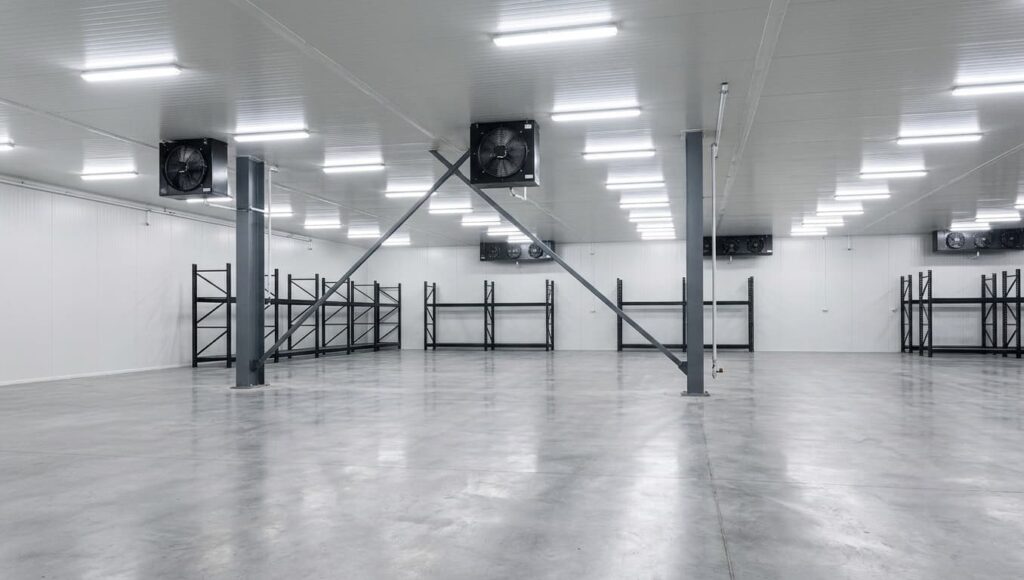
What Are Sandwich Panels? A Complete Guide for Industrial & Commercial Use
Modern construction rarely has the luxury of time. Deadlines are tight, budgets are tighter, and clients expect buildings that perform well for decades — not just look good on day one. That’s the reality pushing architects, contractors, and project managers toward sandwich panels, and honestly, it’s easy to see why.
These panels have quietly become the backbone of industrial and commercial construction across India. Walk into any large cold storage facility, pharmaceutical plant, or logistics hub built in the last decade, and there’s a good chance the walls and roof are made of them.
So What Exactly Is a Sandwich Panel?
The name gives it away, really. A sandwich panel has two outer metal sheets with an insulating core in between — like a structural sandwich. That core is where the magic happens, and depending on what it’s made of, the panel behaves very differently. Common core materials include polyurethane foam (PUF), polyisocyanurate (PIR), mineral wool, and EPS. Each has its own thermal and fire resistance properties, which is why the choice of core matters as much as the metal facings surrounding it. PUF sandwich panels are by far the most widely used in Indian industrial construction. They’re light, thermally efficient, and go up fast — three things that matter enormously on a large-scale project.
The Different Types and Where They’re Used
Not every project needs the same panel, and that’s an important distinction most buying guides skip over.
PUF Panels are the workhorses. Polyurethane foam core, excellent thermal insulation, moisture resistant, and relatively easy to handle during installation. Cold storages, warehouses, and pharma facilities use these constantly because maintaining stable indoor temperatures is non-negotiable in those environments.
PIR Panels step up where fire safety becomes a priority. The polyisocyanurate foam core gives better fire resistance and slightly improved thermal performance compared to PUF. Commercial buildings, especially those with stricter safety codes, often specify PIR over PUF for exactly this reason.
Insulated Wall Panels do double duty — they manage interior temperatures while also cleaning up the exterior aesthetics of industrial structures. Partition systems inside large facilities often use these too.
Insulated Roofing Panels are built for the beating that Indian roofs take. Heavy rains, intense heat, and the occasional hailstorm — these panels handle weather protection while keeping heat gain inside the building to a minimum.
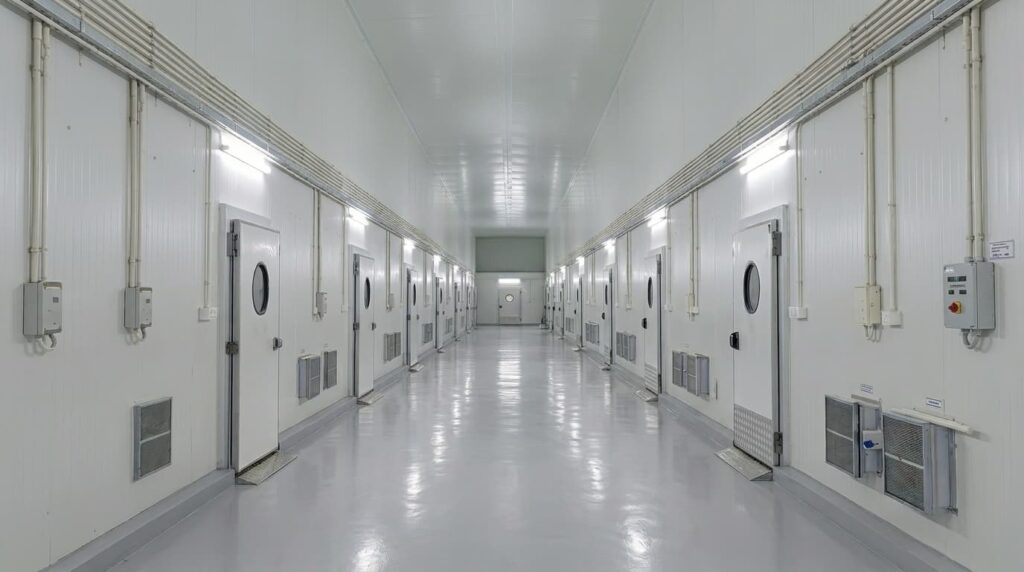
Cold Storage Panels are a specialized category entirely. The insulation requirements for a room holding pharmaceuticals at 2–8°C are different from a general warehouse, and these panels are engineered specifically for refrigeration environments.
Modular Building Panels are what make prefabricated construction genuinely practical. Site offices, labor camps, portable classrooms, institutional buildings — anything that needs to go up quickly and come down or relocate later. These panels make that possible without sacrificing structural integrity.
Why Contractors Actually Prefer Them
The thermal insulation argument is the obvious one, and it’s real. A well-insulated building consumes significantly less energy to cool or heat, and over the lifetime of a building that adds up to serious money. But that’s not what makes contractors reach for sandwich panels first. Speed is. A traditional brick-and-mortar structure for a large warehouse takes months. A sandwich panel structure can be erected in weeks. That difference directly reduces labor costs, equipment hire time, and the overall project timeline — all of which matter to the person signing the purchase order.
The weight advantage is equally significant in areas where foundation loads are a concern. Sandwich panels are dramatically lighter than conventional construction materials while still delivering solid structural performance. Less load on the foundation means less foundation work, which is another line item off the budget. And once the building is up, maintenance is minimal. The metal faces are corrosion-resistant and weatherproof, which means these buildings hold up well with very little ongoing attention.
Sandwich Panels vs Traditional Construction – An Honest Comparison
Feature | Sandwich Panels | Traditional Construction |
Construction Speed | Significantly faster | Slow |
Thermal Insulation | Excellent | Average at best |
Structural Weight | Light | Heavy |
Maintenance Needs | Very low | Ongoing and costly |
Energy Efficiency | High | Poor |
Flexibility / Relocatability | Yes | No |
Long-term Cost | Lower | Higher |
It’s not that traditional construction has no place anymore — there are projects where it makes complete sense. But for industrial and commercial buildings where speed, insulation, and cost control are priorities, sandwich panels have a clear edge. That’s why in sectors like cold chain logistics, food processing, and pharmaceuticals, they’ve largely replaced conventional methods.
BNAL Prefabs — 36 Years of Getting This Right
If you’re sourcing sandwich panels in India, BNAL Prefabs is a name that comes up repeatedly, and for good reason. Founded in 1989, the company has spent over three decades refining their manufacturing processes and building a reputation across sectors that don’t tolerate mediocre materials.
They manufacture continuous line PUF panels, pre-engineered buildings, and complete prefabricated structures. What sets them apart isn’t just the product quality — it’s the end-to-end capability. They handle design, engineering, manufacturing, and dispatch pan-India, which removes a lot of the coordination headache from large projects. Their client base spans warehousing, cold storage, pharmaceuticals, aviation, commercial construction, and institutional infrastructure. That breadth of experience means they’ve encountered most of the unusual project requirements you might throw at them.
Closing Thoughts
Sandwich panels have earned their place in modern construction the right way — by consistently delivering results. Better insulation, faster build times, lower lifecycle costs, and flexibility that conventional materials simply can’t match. Whether your project calls for insulated wall panels, cold storage solutions, roofing systems, or complete modular structures, getting the specification right from the start makes everything downstream easier. BNAL Prefabs brings the technical knowledge and manufacturing capability to make that happen – and 35+ years of projects across India is a track record worth paying attention to.